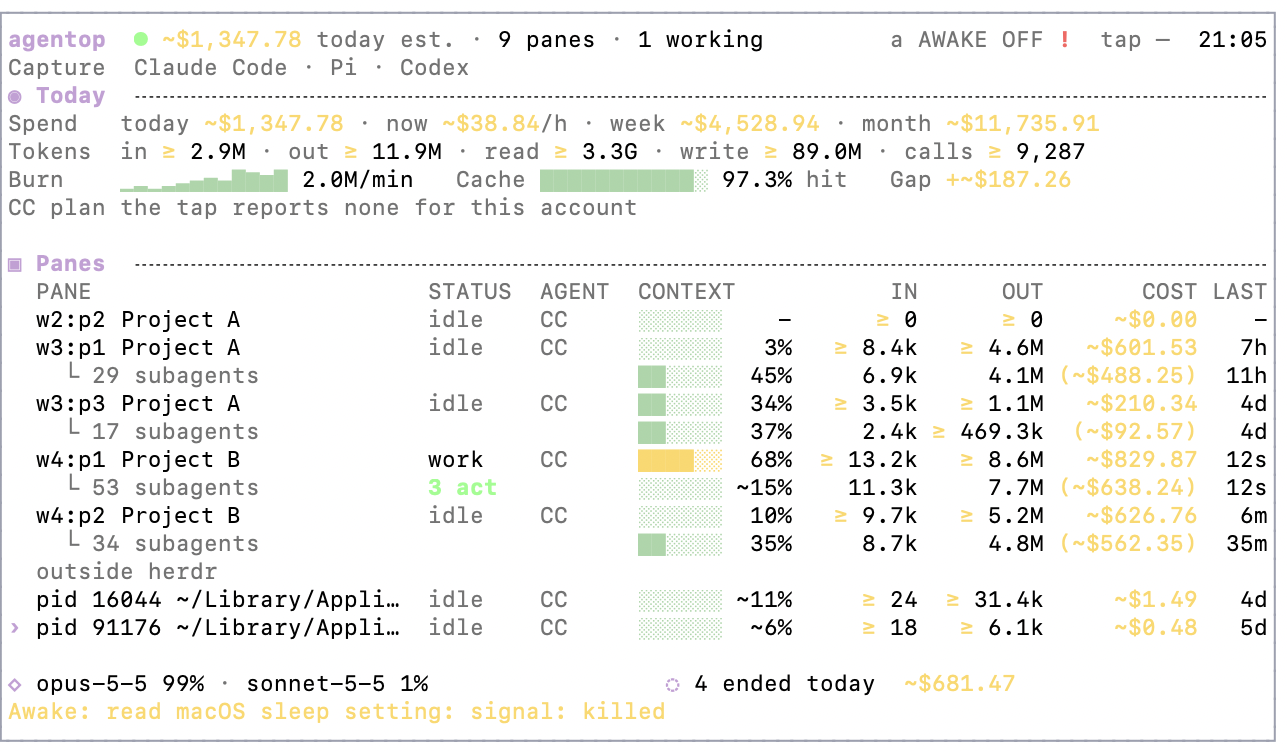
Comparing the usage with my salary missed most of the context. But it did leave me with an awkward question. If that much capability was running through me, what was I actually adding?
Am I simply someone who picked up a few AI tools early, got on with it and became reasonably good at using them? Or is there something more specific I am bringing to the work?
Looking back through the projects, I could see two things happening.
First, some of what had impressed me in the early deliveries was already becoming ordinary. The HTML, the static websites, the standard vibe-coded interfaces. Things I had been pleased to get working were becoming things many more people could produce.
That is not a criticism of those projects. They did their job when they were needed. But being able to generate them was never going to remain much of a distinction.
The more interesting part was what made each one right for the audience it was built for.
The narrative. The vision behind it. The sequence in which an idea needed to unfold. A particular interaction that helped someone understand a difficult concept, or content that reflected the client’s actual situation rather than sounding plausible for any business.
Those details were not finishing touches. In many cases, they were the reason the thing was worth building.
AI helped me develop them, challenge them and make them work. I would not pretend every good idea was mine alone. But neither were they simply sitting inside the model waiting for anyone to retrieve them. They came out of the context I brought, the questions we worked through and the choices made along the way.
Then there was the second change: what happened after delivery.
What people used. What needed explaining. What missed the point. What I had to fix. Each project gave me feedback I could take into the next one. Not just a better prompt, but a clearer understanding of what mattered.
That does not make me irreplaceable. It does mean I am not starting from scratch each time I open a terminal.
So no, I do not think I am just another person who happens to know a few AI tools. Knowing the tools is part of it. So is understanding the client, shaping the experience and learning from what happens when someone actually uses it.
The pride came back, but it was less about the number now. I could see more clearly what the consumption was enabling, and what I was contributing.
I could also see the responsibility that came with it. Once people rely on what you ship, quality, maintenance and setting realistic expectations become part of the work, not things to sort out after the exciting bit.
That is closer to what the job means to me: understand the problem, build something that helps and get it into the hands of the people who need it. Then stay accountable for whether it works.